The Beauty Ritual That Feels Like Therapy

The Beauty Ritual That Feels Like Therapy
Beauty has always promised transformation. In 2026, however, the most compelling promise is not reinvention, but regulation: calmer mornings, steadier evenings, softer landings after overstimulating days. Across the industry, the language of beauty is shifting away from endless novelty and toward something more intimate—ritual, sensation, longevity, and emotional comfort. Vogue reports that skincare in 2026 is increasingly framed through measurable biology and long-term skin health; Allure describes a parallel return to proven actives delivered in smarter, gentler formats; and Mintel places “sensorial synergy” at the center of the year’s beauty conversation, arguing that emotional wellness is now a major driver of purchase and product design. (Vogue)
That change matters because consumers are no longer treating beauty as a shallow add-on to wellness. The beauty ritual of 2026 is becoming a private architecture of care: touch that slows the breath, textures that cue the body to unwind, fragrance that changes the mood of a room, and formulas that work with the skin rather than bully it into submission. Even the most advanced products are being wrapped in a more human experience. As Allure notes, skincare is becoming more experiential, while fragrance is moving toward comfort, escapism, and scent-stacking routines that evolve with mood throughout the day. (Allure)
The result is a new kind of luxury—one that feels less performative and more therapeutic ✨. Not therapy in the clinical sense, of course, but beauty that understands the emotional reality of modern life: stress is visible, fatigue is cumulative, and the most sophisticated routine may be the one that makes you feel held.
Why beauty in 2026 is moving from results to ritual
There was a time when beauty marketing focused almost exclusively on correction: erase, tighten, brighten, reverse. That vocabulary now feels strangely thin. According to Mintel’s 2026 global beauty and personal care predictions, the next wave is being shaped by multisensory products, functional fragrance, immersive experiences, and a consumer desire for rituals that support emotional wellbeing, not just visible outcomes. In Mintel’s framing, beauty is moving toward experience-first value, where texture, scent, and mood are no longer secondary flourishes but central to how products are understood and chosen. (Mintel)
This is not a rejection of efficacy. If anything, 2026 beauty is unusually serious about science 🧬. Vogue highlights regeneration, cellular health, next-generation LED, and personalized treatment plans. Allure points to smarter delivery systems, upgraded classics like retinol and vitamin C, and more targeted peptides and growth factors. What has changed is that performance alone is no longer enough; efficacy has to coexist with pleasure, trust, and ritual coherence. (Vogue)
That duality explains why the most resonant routines this year do not look chaotic or maximalist. They look edited. A beautiful cleanser with a satisfying slip. A serum that feels silky rather than medicinal. A face massage that makes the jaw unclench. A body treatment with the formulation intelligence once reserved for the face. Vogue Scandinavia notes that clinical body care is rising in 2026, with ingredients like retinol, lactic acid, niacinamide, and peptides migrating into body routines with far greater sophistication. (Vogue Scandinavia)
The ritual that feels like therapy, then, is not built on excess. It is built on intentional sequencing.
The new luxury is nervous-system beauty
If 2019 beauty was about aspiration and 2023 beauty was about optimization, 2026 beauty is about regulation. That is why the most modern rituals often begin with atmosphere rather than product. Light changes first. Then temperature. Then texture. A routine becomes less about “fixing” the face and more about cueing the body that the day is shifting.
This is where the year’s fragrance conversation becomes especially revealing. Allure’s reporting on 2026 fragrance trends describes a market drawn to comfort, escapism, and scent-stacking—not simply as a trend cycle, but as a personalized way of living with fragrance that changes alongside mood and context. Layering a scented body product with a perfume, or coordinating shower care with an eau de parfum, turns fragrance into an emotional environment rather than a finishing touch. (Allure)
The same logic is reshaping skincare. Allure notes growing consumer appetite for products that feel good to use, from texture to scent to application ritual, while Vogue describes a broader turn toward treatments that respect skin integrity and long-term health. In practice, that means a 2026 beauty ritual is less likely to rely on aggressive overuse and more likely to center on consistency, tactile pleasure, and a sense of quiet order. (Vogue)
In high-end beauty, this emotional intelligence now reads as true premium value 💎. Anyone can sell a claim; not everyone can create a product you want to return to at the end of a difficult day.

Skincare becomes a ceremony, not a checklist
The most elegant skincare routines of 2026 have a certain slowness to them. Not because they are long, but because they are embodied. Beauty editors and experts are no longer celebrating ten-step complexity for its own sake. Instead, the movement is toward fewer, better, smarter steps—formulas with strong scientific foundations, layered in ways that feel emotionally intuitive.
Allure’s 2026 skincare report captures this mood with unusual clarity: gold-standard ingredients are returning in upgraded form, with better delivery systems and more refinement. The point is not to chase obscure actives for novelty’s sake, but to make proven ingredients more tolerable, more elegant, and more effective. That alone changes the emotional texture of a routine. When a formula is less irritating and more graceful to apply, discipline turns into desire. (Allure)
Vogue goes a step further, arguing that 2026 is being defined by measurable outcomes, transparency, regenerative thinking, and a preference for long-term skin health over cosmetic quick fixes. There is a subtle psychological shift embedded here: the routine becomes less about panic and more about stewardship. You are not punishing your face into submission; you are caring for tissue, barrier function, elasticity, and future resilience. (Vogue)
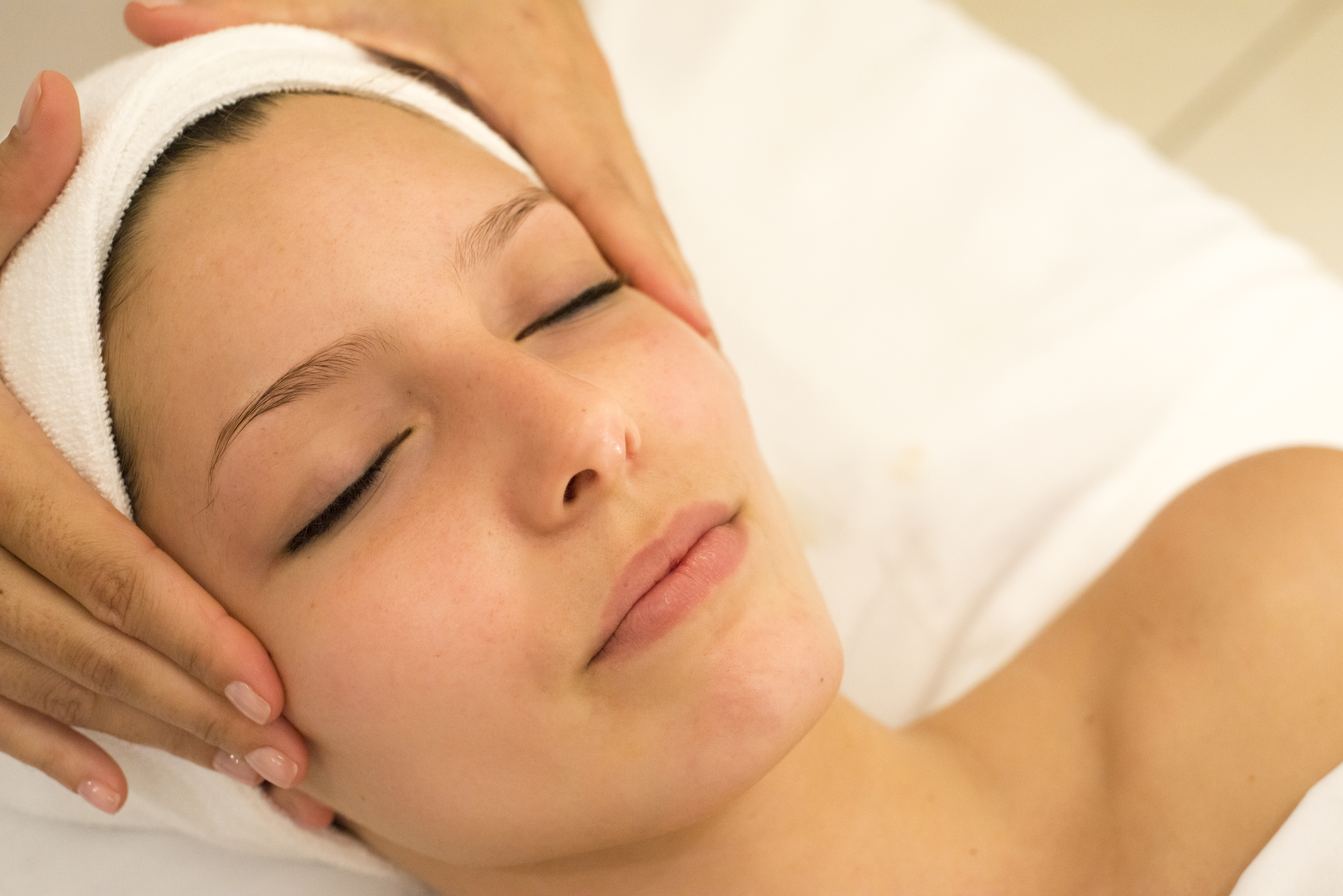
That is precisely why the most therapeutic-feeling rituals often include a massage step. Whether with fingertips, a short lymphatic sequence, or a pause to press product into the skin rather than rush it across the surface, touch restores a sense of ownership over the face. It interrupts the frantic energy of the day. It also mirrors the broader 2026 return to trained hands and professional expertise noted by Vogue Scandinavia, where facialists are seeing renewed demand for in-clinic care and smarter skin stimulation. (Vogue Scandinavia)
Fragrance is now part of emotional architecture
Perfume used to be sold as a signature. In 2026, it is increasingly sold as a state of mind. That distinction is profound. A signature is fixed; a mood is responsive. The beauty ritual that feels like therapy embraces that responsiveness, allowing scent to shift with weather, energy, time of day, or even emotional need.
Allure identifies comfort and escapism as defining fragrance currents for 2026, alongside the now-mainstream practice of scent-stacking. Rather than wearing one polished scent identity from morning to night, consumers are building softer, more adaptive olfactory wardrobes. A body cream for warmth, a mist for brightness, a perfume for depth. The ritual is modular, expressive, and emotionally literate. (Allure)
This trend also dovetails with Mintel’s view that functional fragrance and multisensory design are becoming central to beauty’s future. Products are being positioned less as passive luxuries and more as daily mood tools—objects that participate in how a person feels, not merely how they smell. (Mintel)
There is a quiet sophistication in that idea 🌍. Luxury no longer has to announce itself with projection. Sometimes it arrives as a warm skin scent on a cashmere scarf, or a candle lit before the cleanser is opened.

Body care rises to face-level importance
One of the sharpest signs that beauty is becoming more holistic is the rise of body care that behaves like skincare. Vogue Scandinavia’s reporting on 2026 points to clinical body care as an important development, with actives once reserved for the face now arriving in washes, lotions, and targeted treatments for the body. (Vogue Scandinavia)
This matters aesthetically, but it also matters emotionally. Body care is where ritual often becomes most therapeutic. The pace is different. The movements are broader. There is an immediate link between application and nervous-system feedback: warm water, oil, lotion, pressure, scent. A serum on the face can feel meticulous; a rich body treatment can feel almost ceremonial.
That is why the evening body ritual is becoming one of the quiet stars of 2026 beauty. The smartest luxury brands understand that the body is where burnout often becomes legible first—tight shoulders, dull skin, poor sleep, a sense of disconnection from physical selfhood. Products designed for the body now carry better textures, more serious ingredients, and more intentional fragrance profiles, creating a category that feels less like basic maintenance and more like restoration.
The emotional effect is subtle but real. When body care is elevated, the entire routine stops orbiting the mirror.
The human touch is back
Even in a year obsessed with personalization and advanced delivery systems, there is a strong countercurrent away from algorithmic perfection. Mintel calls this “the human touch revolution,” suggesting consumers are increasingly drawn to beauty that feels emotionally real rather than overly polished or synthetic. Wallpaper’s 2026 beauty reporting echoes this wider blending of aesthetics, wellness, and embodied expertise across categories. (Mintel)
That re-humanization helps explain why rituals involving touch—facials, scalp work, slow application, manual massage—feel so culturally resonant right now. Beauty is no longer only visual; it is sensory, relational, and deeply tied to how one inhabits the body. In a world saturated with screens and filtered imagery, tactile rituals restore proportion. They are proof that care does not have to be optimized to be effective.
This may be the hidden reason the “beauty ritual that feels like therapy” is striking such a chord in 2026. It offers a form of privacy. Not content, not performance, not productivity—just repetition, sensation, and a temporary return to self.

How to build a ritual that actually feels restorative
A therapeutic-feeling beauty ritual does not need a hundred products or a spa-sized bathroom. It needs rhythm. The most successful routines tend to follow a sequence that the body can learn: cleanse, treat, press, scent, soften, exhale. What matters is continuity. A candle before cleansing. Warm palms before serum. A neck-and-shoulder product that tells the body the workday is over. A fragrance layer chosen for comfort rather than impression.
This approach also aligns with the scientific seriousness of 2026 beauty 🔬. You can absolutely center proven ingredients, barrier support, peptides, regenerative thinking, and professional-grade body care while still making the experience sensorially beautiful. In fact, that pairing appears to be the year’s defining ideal. Science and softness are no longer opposites; they are partners. Vogue, Allure, and Mintel all point in this direction from different angles: measurable skin health, smarter formulations, and sensory design that supports emotional wellbeing. (Vogue)
The most premium routines of the year therefore do two things at once. They improve the skin. And they improve the atmosphere around the act of caring for it.
The future of beauty is emotionally intelligent
It is tempting to dismiss talk of “ritual” as mere marketing garnish. But in 2026, the concept feels sturdier than that. Too many signals point in the same direction: regenerative skin health, experiential skincare, fragrance for mood, body care sophistication, sensory-first design, and a renewed appetite for human touch. Together, they suggest that beauty is becoming emotionally intelligent—less fixated on surface correction alone, more attentive to how products fit into the lived texture of a person’s day. (Vogue)
And perhaps that is why the most desirable ritual now feels almost therapeutic 💡. Not because a serum can replace therapy, but because beauty at its best can create a gentle structure for self-connection. It can slow the evening down. It can make the mirror feel less adversarial. It can turn a routine into a room of one’s own.
The future-facing beauty ritual is not about being flawless. It is about being soothed, supported, and beautifully returned to yourself.

