How to Patch-Test Skincare Properly
Images

How to Patch-Test Skincare Properly
Patch-testing is one of those quietly elite habits—like washing silk correctly or storing fragrance away from sunlight. It isn’t flashy. It isn’t “fun.” And yet it can save you from the most unglamorous skincare outcome of all: a full-face reaction that takes weeks to calm.
In the age of high-performance actives, “skin cycling,” and routines that change as often as micro-trends, skin is exposed to more variables than ever: new preservatives, botanical extracts, fragrance components, exfoliating acids, retinoids, and combinations that can stress the barrier. The American Academy of Dermatology (AAD) explicitly recommends testing skin care products before adding them to your routine—and it provides a clear at-home method designed to predict negative reactions on a smaller, more manageable area.
Consider patch-testing your routine’s insurance policy: a small, controlled trial that helps you separate a great product from a great product for your skin.
Patch-testing: what it is—and what it isn’t 🔬
At its simplest, patch-testing is a controlled exposure: you apply a product to a small area repeatedly and watch for changes.
But there’s an important distinction:
At-home patch-testing (what you can do today)
This is a practical “compatibility test.” It can help you catch irritation, burning, itching, redness, swelling, or delayed sensitivity before you apply the product all over your face. The AAD’s guidance is designed for everyday consumers to reduce risk when introducing new skincare.
Clinical patch testing (what dermatologists do)
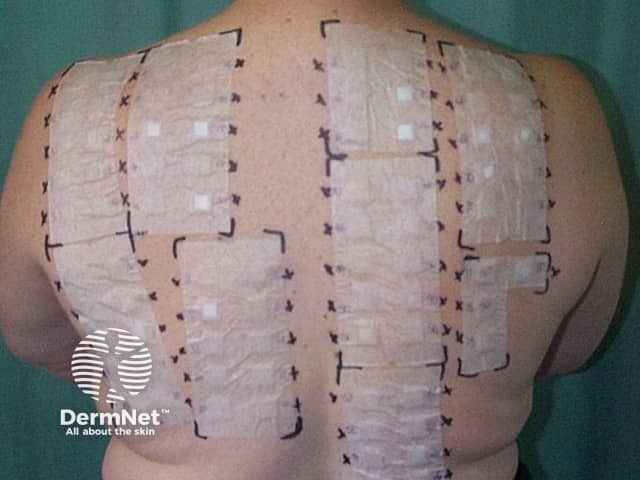
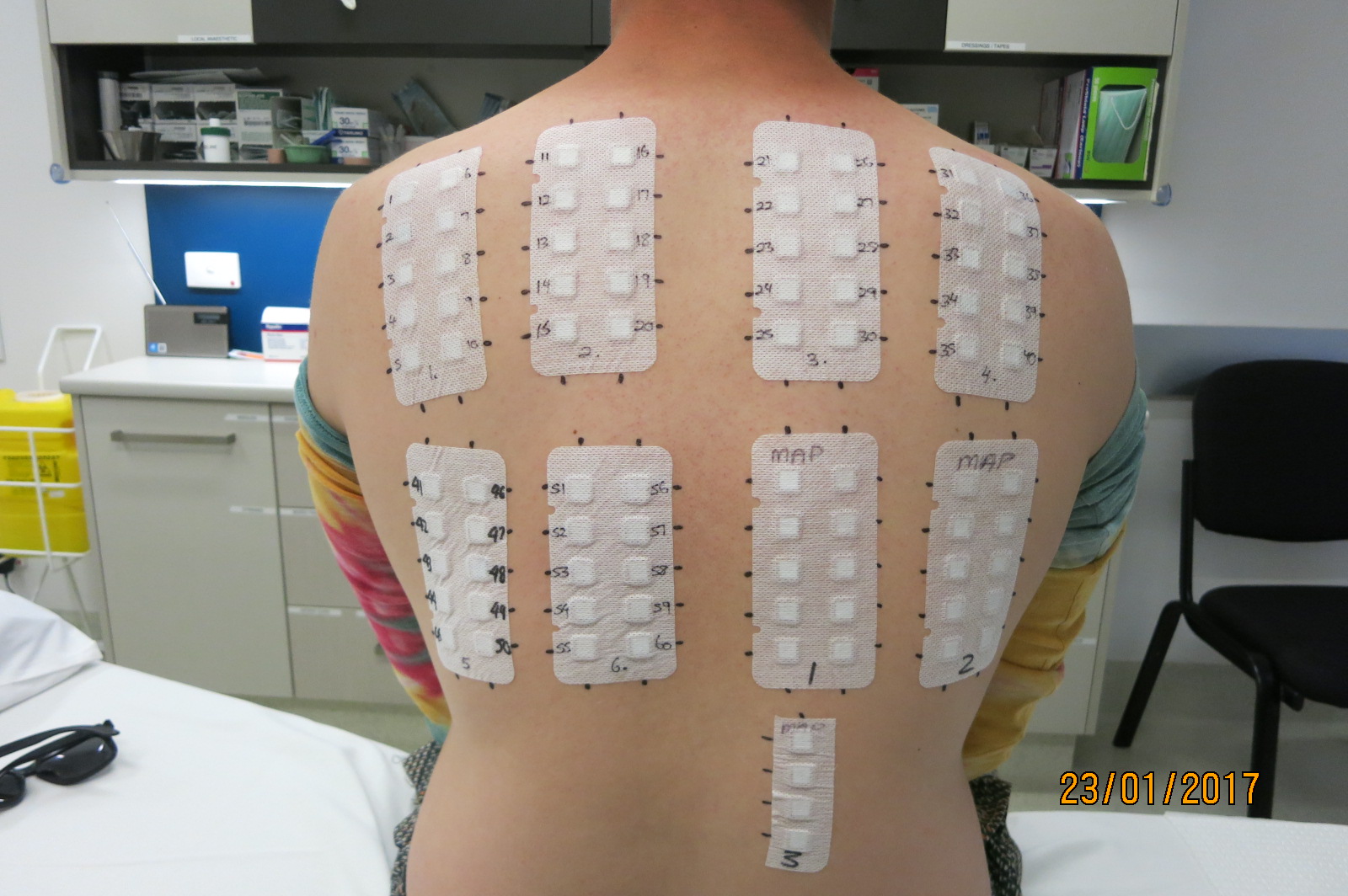
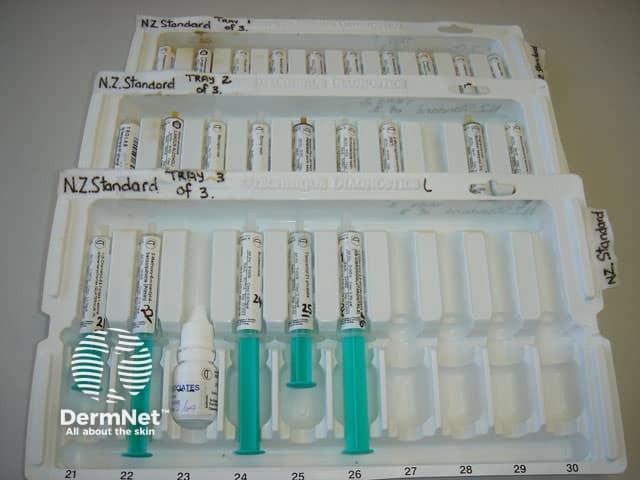
This is diagnostic. Dermatology clinics apply standardized allergens (often on the back) and interpret reactions across a multi-day schedule. DermNet describes patch testing as a tool to investigate and confirm substances that cause allergic contact dermatitis, with allergens applied for 48 hours and readings typically done later because reactions can take time to develop.
The key takeaway: a home patch test can tell you “my skin doesn’t like this,” but it usually can’t tell you which ingredient is responsible. If you react repeatedly, clinical testing is where answers become precise.
The dermatologist-recommended at-home patch-test method 🧬
If you’ve been doing a one-night “dab behind the ear and pray” test, you’re not alone. But many reactions are delayed—especially allergic ones—and a single application can miss them.
The AAD’s at-home method is more rigorous:
Step 1: Pick the right test spot
Choose a quarter-sized area where the product won’t be rubbed off or washed away—AAD suggests places like the underside of your arm or the bend of your elbow.
Step 2: Apply the product twice daily for 7–10 days
Use the same amount and thickness you would normally use on your face. Continue for the full window because some reactions don’t appear immediately.
Step 3: Match the product’s real-world contact time
If it’s a leave-on serum or moisturizer, leave it on. If it’s a rinse-off product like a cleanser, keep it on the test spot for about five minutes (or as directed), then rinse—because that mirrors real use.
Step 4: Read the result honestly
If there’s no reaction after 7–10 days, the AAD says you can go ahead and use the product. If you develop a reaction, wash it off gently and stop using it.
This is the version of patch-testing that actually respects how skin behaves: not just immediately, but over time.
Where to patch-test: choosing a spot that gives useful information 🌿

People argue endlessly about “the best” patch test location. In reality, the best location depends on what you’re trying to learn—and what you’re willing to risk.
The forearm (best for method + consistency)
It’s easy to see, easy to keep clean, and recommended by the AAD for at-home testing.
If you want a disciplined, repeatable test, this is the most reliable choice.
Behind the ear (best for discretion)
It’s hidden and convenient—great if you’re worried about a visible reaction. Many consumer guides recommend it for that reason. (If you do this, keep your hair products and fragrance away from the area so you don’t confuse the results.)
Jawline/cheek (best for “face realism,” higher risk)
Facial skin can react differently than arm skin. Some people “graduate” a product to a small area of the face after an initial arm test—especially if they’re prone to facial contact dermatitis. If you choose this route, keep it small and controlled (one side only), and do not add other new products simultaneously.
A refined approach: start on the forearm (predictability), then—only if clear—trial a tiny facial zone if you’re very reactive. It’s slower, but it’s safer.
Understanding reaction timelines: immediate vs delayed (and why it matters) 💡
A patch test isn’t just “red or not red.” The timing and the texture of what you see often tell you what kind of problem you’re dealing with.
1) Immediate burning or stinging (minutes to hours)
This often points to irritation—especially if the product contains acids, high alcohol content, or your barrier is already compromised.
DermNet explains irritant contact dermatitis as damage to the skin surface happening faster than the skin can repair; irritants can remove oils and natural moisturizing factors, allowing deeper penetration and inflammation.
In other words: if your skin is “leaky,” everything feels louder.
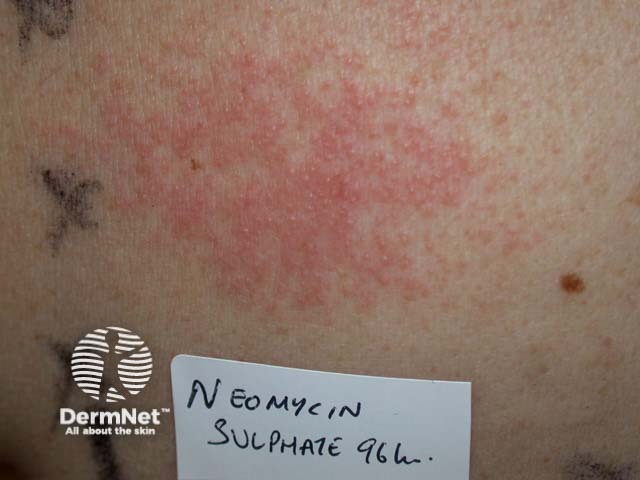
2) Delayed rash (24–96 hours, sometimes longer)
Allergic contact dermatitis can be delayed because it’s an immune response that may take time to appear. A clinical review notes key differences: irritant dermatitis tends to have more rapid onset, while allergic dermatitis can spread and behave differently.
This is exactly why the AAD’s 7–10 day repeat method is so useful: it captures delayed reactions you might miss with a single dab.
3) Breakouts (days to weeks)
Acne-like bumps are trickier: they can reflect occlusion, comedogenicity, or irritation-triggered inflammation. A patch test can still help, but you may need more time to observe, and you must keep the rest of your routine stable so you can attribute changes correctly.
The editorial rule: fast sting suggests irritation; slow rash suggests allergy risk; slow congestion suggests formula fit. Patch-testing helps you identify which lane you’re in.
How to “read” your patch test like a professional 🔬✨
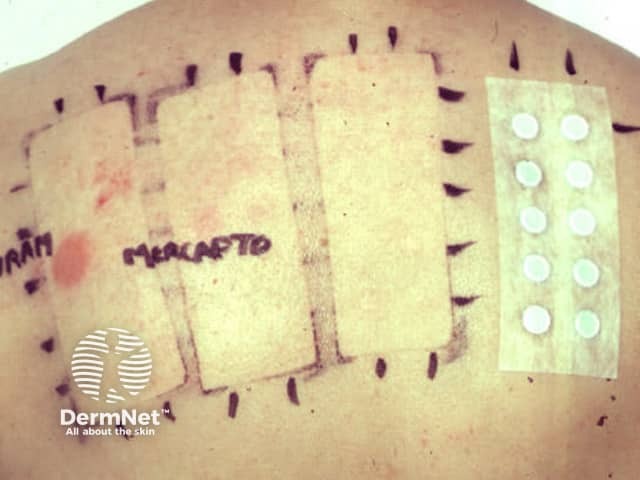
When you check your patch test area, don’t just look for “red.” Look for pattern and sensation:
Signs your skin likely dislikes the product
persistent redness (not fading within a short period)
itching
swelling
raised rash texture
burning that continues or intensifies
The AAD specifically frames a negative reaction as red, itchy, or swollen skin—and says if you develop a reaction, wash the product off and stop using it.
Signs that can be “normal” (context matters)
The AAD also notes that some ingredients—like retinol and glycolic acid—can cause irritation, especially in sensitive skin, and that mild irritation can be normal and temporary.
This is where people get confused: mild tingling doesn’t automatically mean “allergy.” But patch-testing helps you learn your threshold—whether that mild sensation settles quickly, or escalates into a persistent reaction.
How to document like a derm
Take a quick photo in the same lighting each day. Your eyes normalize gradual change; your camera doesn’t. If you end up needing clinical patch testing, those images are also useful context.
What to do if you react (and how to calm it fast) 🌿
If you develop a reaction during patch testing, the goal is simple: remove the trigger and support the barrier.
The AAD’s advice is straightforward:
wash the product off gently,
don’t use it again,
and consider soothing supports like a cool compress or petroleum jelly.
A calm, elegant recovery mini-plan (48–72 hours)
Keep it minimal:
gentle cleanser (or rinse if cleansing stings)
bland moisturizer
petrolatum on the irritated spot if needed
sunscreen if the area is exposed
If the reaction is severe or not relieved with basic measures, the AAD suggests you may need to see a dermatologist.
Important: if you have facial swelling, extensive blistering, or any breathing difficulty, treat it as urgent medical territory—don’t troubleshoot it through skincare.
Rinse-off vs leave-on products: patch-testing rules that change slightly 💎
Not all products behave the same way on skin because exposure time differs.
Leave-on products (serums, creams, SPFs)
Patch-test with normal contact time—leave them on—because that’s how your face will experience them.
Rinse-off products (cleansers, masks)
Follow the AAD’s guidance: keep the product on the test area for about five minutes (or the product’s directed time), then rinse.
Hair dye, lash glue, and high-sensitization categories
These categories deserve extra caution because reactions can be intense and placement (near eyes/scalp) increases stakes. If you have any history of reactions to dyes, fragrances, or adhesives, consider skipping DIY experiments and seeking professional guidance.
When at-home patch tests aren’t enough: signs you should get clinical patch testing 🧬
If you repeatedly react to products—especially “gentle” ones—or if you can’t identify a pattern, clinical patch testing becomes the most efficient move.
DermNet describes clinical patch testing as applying diluted allergens (often on the back) for 48 hours, with later readings because reactions typically take 48–96 hours to develop.
An NHS patient leaflet similarly describes patches staying in place for 48 hours, removal, and later assessment across multiple visits in a week.
Why multiple readings matter
A medical review on patch tests notes that readings after 72–96 hours are important because sensitization reactions can occur later, and early findings can be misleading.
Consider clinical testing if:
your rash keeps returning
you react to several unrelated products
you suspect fragrance, preservatives, or metals but can’t pinpoint
you have eczema and frequent flares with skincare
your reaction spreads beyond the application area (a classic allergic clue)
Clinical patch testing doesn’t just tell you what to avoid—it tells you what you can finally stop avoiding.
The “new product runway” protocol: how to introduce skincare safely ✨
Patch-testing is step one. Step two is introducing products in a way that keeps your results readable.
Here’s a luxury-level protocol that still feels realistic:
Week 1: One new product only
Keep the rest of your routine unchanged. If you add a serum, don’t also add a new cleanser and sunscreen in the same week. Confusion is the enemy of certainty.
Week 2: Use it in the right context
If it’s an active (retinoid, exfoliating acid, pigment corrector), start with conservative frequency even if you patch-tested well. The AAD notes that some actives can be irritating and that sensitivity is possible even when not allergic.
Week 3: Only then, add the next product
This is how you build a routine that feels curated rather than chaotic—and how you avoid the dreaded “everything broke me out, I have no idea why” moment.
The bottom line
Patch-testing is not paranoia. It’s precision.
Use the AAD’s repeat method—twice daily on a small area for 7–10 days, matching real-world wear time—because it’s designed to catch delayed reactions, not just immediate drama.
And if your skin keeps reacting, move beyond guesswork: clinical patch testing exists for exactly this reason, with allergens applied for 48 hours and readings over multiple days to capture delayed hypersensitivity.
When you patch-test properly, you’re not slowing down your skincare journey. You’re preventing detours—and protecting the one thing every “results” routine needs: a calm, intact barrier. 🌿💎
