The Secret to Natural-Looking Foundation
The Secret to Natural-Looking Foundation
The Beauty of Skin That Looks Like Skin ✨
In today’s beauty world, the most coveted makeup look is no longer heavy coverage or dramatic transformation. Instead, it is something far more refined: skin that looks effortlessly flawless while still appearing completely natural. The modern foundation ideal is subtle, breathable, and luminous — enhancing the skin rather than masking it.
Professional makeup artists often say the best foundation is the one no one can see. The goal is not to cover your skin, but to perfect it while preserving its natural texture and glow. Achieving this delicate balance requires more than simply choosing a popular product. It involves preparation, technique, and an understanding of how light interacts with skin.
Natural-looking foundation is the quiet luxury of makeup — understated yet powerful. When done correctly, it creates a complexion that appears healthy, radiant, and beautifully real.
Why Most Foundation Looks Heavy
One of the biggest reasons foundation appears unnatural is that it is treated like paint rather than skincare-enhanced makeup. Many people apply too much product too quickly, expecting instant perfection. Unfortunately, the result often settles into pores, clings to dry areas, or creates a flat, mask-like effect.
The skin itself is rarely the problem. Instead, the issue lies in preparation and technique.
Skin naturally has texture, movement, and variation in tone. When foundation is applied with the expectation that it should completely erase these characteristics, the result inevitably looks artificial. Natural beauty embraces subtle imperfections because they contribute to a realistic, luminous finish.
Professional makeup artists understand that foundation should behave more like a veil than a layer.
The Foundation Secret Professionals Swear By 💡
The true secret to natural-looking foundation is surprisingly simple: thin layers applied gradually.
Instead of applying a thick coat all at once, professionals build coverage slowly. This technique allows the skin’s natural tone and dimension to remain visible beneath the makeup.
Thin layers also blend more seamlessly into the skin, creating the illusion that the complexion is naturally flawless rather than cosmetically perfected.
This layering technique mirrors the philosophy behind luxury skincare — subtle, thoughtful enhancement rather than dramatic concealment.
Skin Preparation: The Step That Changes Everything 🌿
Before foundation even touches the face, the most important work happens during skin preparation. Healthy, hydrated skin allows makeup to melt into the complexion rather than sitting on top of it.
Many people skip this stage, yet it is the single most transformative step in achieving natural results.
Hydration Creates Realistic Texture
When skin is hydrated, foundation spreads more evenly and appears luminous rather than matte and dry. Hydrated skin reflects light naturally, which enhances the illusion of bare skin.
A simple routine works best:
Cleanse gently to remove oils and residue.
Apply a lightweight moisturizer suited to your skin type.
Allow the product to absorb fully before applying makeup.
The Modern Role of Primer
Primer is no longer just about smoothing pores. Today’s formulas often contain skincare ingredients designed to balance hydration, blur texture, and improve makeup longevity.
When used correctly, primer acts as a bridge between skincare and makeup — ensuring foundation becomes part of the skin rather than a separate layer.
Choosing the Right Foundation Formula 🧬
The next step in achieving natural-looking skin is selecting the correct formula.
Not all foundations are designed for the same effect. Some prioritize full coverage, while others focus on luminosity and skin enhancement.
For the most natural finish, professionals often recommend:
Lightweight liquid foundations
Skin tints or serum foundations
Hydrating medium-coverage formulas
These products mimic real skin more convincingly than heavy matte foundations.
Coverage can always be added gradually. Removing excess foundation, however, is far more difficult.
Finding the Perfect Shade Match 🔬
Even the most luxurious foundation will look unnatural if the shade is incorrect.
One of the most common mistakes is testing foundation on the hand or wrist. These areas rarely match the tone of the face or neck.
The most accurate way to match foundation is along the jawline, blending slightly toward the neck. The ideal shade disappears seamlessly into the skin without creating a visible boundary.
Undertone also plays a critical role. Skin undertones generally fall into three categories:
Warm
Cool
Neutral
Understanding undertone ensures the complexion looks vibrant and balanced rather than dull or overly pink.
Application Techniques That Make Foundation Invisible 💎
Even with perfect preparation and shade matching, technique ultimately determines the final result.
The Finger Technique
Many professional artists still use their fingers for foundation application. The warmth of the hands helps melt the product into the skin, allowing it to blend naturally.
Using fingers also prevents over-application because it encourages controlled placement.
The Damp Sponge Method
A damp makeup sponge is one of the best tools for achieving a seamless finish. The sponge absorbs excess product while pressing foundation into the skin.
This technique creates a diffused effect that mimics natural skin texture.
The Foundation Brush Approach
A dense but soft brush provides precision and control. When used with light circular motions, brushes distribute product evenly without streaking.
The key with brushes is always to finish by lightly tapping or blending the product into the skin for a polished finish.
Where Foundation Should Actually Go
Another secret professionals use is strategic placement.
Instead of applying foundation across the entire face, they focus coverage where it is needed most — typically around the center of the face.
These areas may include:
Around the nose
The chin
The center of the forehead
Areas with redness or uneven tone
From there, the foundation is blended outward until it fades naturally into the skin.
This technique preserves the natural dimension of the face while preventing buildup.
Images: Natural Foundation Application
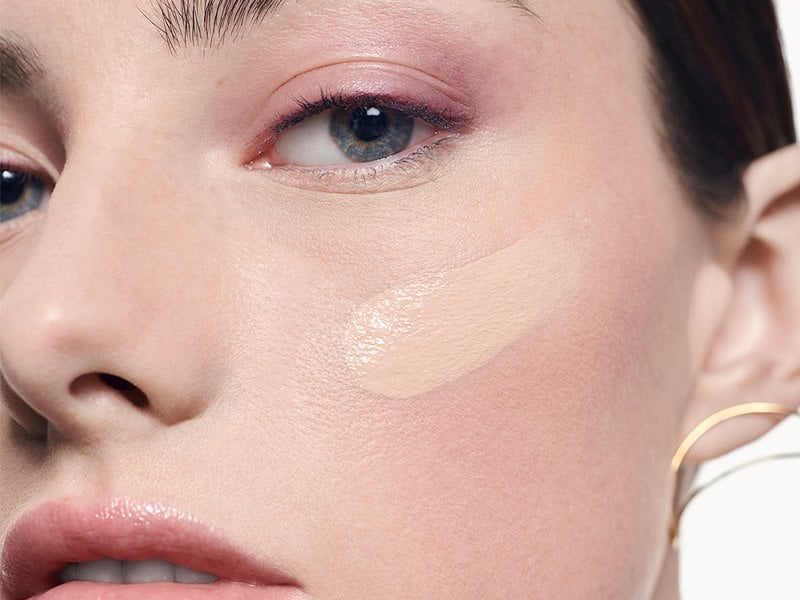


4
The Role of Concealer in Natural Makeup
A common misconception is that foundation alone should perfect the entire complexion. In reality, concealer often does the heavier work.
Using concealer strategically allows foundation to remain light and breathable.
Instead of layering foundation repeatedly over blemishes or dark circles, apply a targeted concealer after foundation.
This technique preserves the delicate, skin-like finish while still correcting imperfections.
Setting Foundation Without Losing Glow ✨
Setting makeup is essential, but it must be done carefully to avoid flattening the complexion.
Heavy powder can instantly remove the natural luminosity that makes foundation appear realistic.
The modern approach is selective setting.
Powder should be applied lightly to areas prone to shine, such as:
The center of the forehead
Around the nose
The chin
The rest of the face can remain powder-free, allowing natural radiance to shine through.
A soft-focus finishing powder works best for maintaining a refined texture.
The Rising Trend of “Skin First” Beauty 🌍
Beauty trends in recent years have shifted dramatically toward what many experts call the skin-first philosophy.
Instead of relying on makeup to create the illusion of good skin, people are investing in skincare routines that improve their complexion naturally.
As a result, foundation has evolved from a heavy cosmetic product into a subtle finishing step that enhances already healthy skin.
This movement reflects a broader cultural shift toward authenticity and minimalism.
The most admired beauty today looks effortless — even when it is carefully crafted.
The Confidence of a Natural Complexion
There is something undeniably elegant about makeup that looks invisible. It signals confidence, sophistication, and self-awareness.
Natural-looking foundation does not compete for attention. Instead, it allows the eyes, smile, and overall expression to remain the focus.
When foundation is applied with thoughtful preparation, careful layering, and the right technique, the result is timeless.
The skin looks healthy. The complexion looks luminous. And the makeup feels as comfortable as bare skin.
Final Thoughts
The secret to natural-looking foundation is not a single product or trick. It is a philosophy — one that prioritizes skin health, subtle application, and strategic enhancement.
By preparing the skin properly, choosing lightweight formulas, applying thin layers, and blending carefully, anyone can achieve the coveted “your skin but better” effect.
True beauty rarely comes from covering the skin completely. Instead, it comes from allowing natural radiance to shine through — with just a touch of thoughtful artistry.
