Best Buy Review: Is Best Buy Still the Best Place for Electronics?
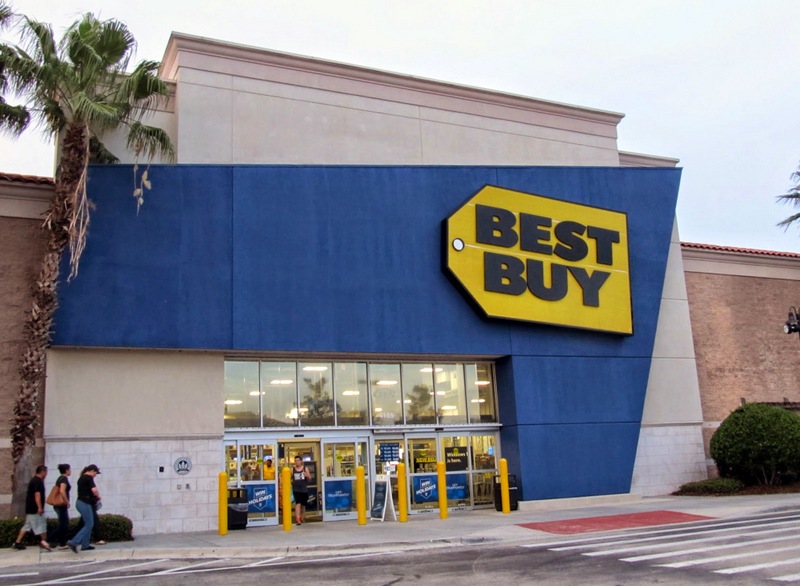
Best Buy Review: Is Best Buy Still the Best Place for Electronics?

There was a time when “electronics shopping” meant making a pilgrimage. You went for the television, stayed for the headphones, and somehow left with a surge protector, a game, and the vague thrill of having touched the future. In 2026, that experience is far more fragmented. Amazon owns convenience. Apple owns aspiration. Brand-direct sites own exclusivity. Warehouse clubs own blunt-force value. And yet Best Buy still holds a very particular kind of cultural and commercial ground: it remains one of the few major retailers where mainstream electronics, premium personal tech, and increasingly relevant wellness hardware live under the same roof. (bestbuy.com)
That overlap matters more than it did even a few years ago. Beauty in 2026 is no longer confined to jars and palettes; it is increasingly shaped by devices, diagnostics, light therapy, recovery tech, and science-forward rituals at home. Vogue has identified “cellness” and science-backed skincare, including red light therapy, as defining forces in 2026 consumer beauty. Allure’s 2026 skincare forecast points to stronger-but-gentler actives, next-generation peptides, and sunscreen innovation, while Marie Claire’s CES coverage shows how beauty and wellness hardware are moving further into the consumer-electronics mainstream. (Vogue)
So the right question is not simply whether Best Buy is still “the best place for electronics.” The sharper 2026 question is whether Best Buy is still the smartest place to shop when electronics have become part of beauty, health, self-care, and lifestyle. On that front, the answer is more nuanced than nostalgia would suggest—and more favorable than skeptics may admit. (bestbuy.com)
Why this question feels newly relevant in 2026
Retail categories are dissolving in elegant, expensive ways. A skincare enthusiast today may shop for an LED face mask, a facial cleansing tool, a smart scale, noise-canceling headphones for guided recovery, and an air purifier for skin-sensitive living—all within one broader ecosystem of “beauty-adjacent electronics.” That is exactly the terrain Best Buy has been expanding: its site now actively merchandises health, wellness, personal care, and home beauty devices alongside traditional consumer electronics. (bestbuy.com)
The beauty industry itself is driving that shift. Vogue’s 2026 trend forecast highlights cellular wellness, science-backed skincare, and red light therapy; Allure sees makeup and skincare becoming more experimental yet more performance-driven; Marie Claire’s CES 2026 roundup underscores that beauty devices are no longer niche curiosities but headline-worthy launches. In other words, beauty has become a hardware story as much as a formulation story. 🧬 ✨ (Vogue)
This is where Best Buy becomes unexpectedly relevant to a beauty conversation. It may not have the editorial glamour of a luxury beauty boutique, but it does have a key modern advantage: it knows how to sell gadgets, explain specs, offer pickup, handle returns, and wrap devices into support plans. In 2026, when beauty increasingly looks like tech, that operational fluency matters. (bestbuy.com)
Best Buy’s strongest 2026 advantage: shopping the category mash-up

Best Buy’s core strength is not that it has become the most luxurious retailer. It has not. Its strength is that it has become a highly practical curator of modern device-driven living. A shopper can browse laptops and tablets, then move naturally into wearables, personal care, wellness tech, and home beauty devices without leaving the ecosystem. That breadth is especially compelling in a year when beauty routines increasingly include LED masks, microcurrent tools, massage and recovery devices, and app-friendly at-home systems. (bestbuy.com)
The retailer’s beauty-tech relevance is not theoretical. Best Buy has dedicated pages for LED face masks and home beauty devices, with product language that explicitly positions them as tools for bringing professional-level skincare into the home. That aligns almost perfectly with the 2026 beauty narrative coming from major editorial voices: science-backed, self-directed, results-oriented, and increasingly comfortable with device-led rituals. (bestbuy.com)
For the consumer, this creates a valuable kind of frictionlessness. The person buying an LED mask is often also buying a charger, a travel case, a smart mirror-adjacent device, or a wellness accessory. Best Buy understands cross-category baskets better than a beauty retailer typically does, because it was built for ecosystem shopping long before beauty tech became fashionable. That does not make it more glamorous than Sephora or more specialized than a med-spa supplier; it makes it more useful. (bestbuy.com)
The in-store argument still matters
For a certain kind of purchase, the internet remains unmatched. For a device you plan to hold against your face, wear on your wrist, or integrate into a daily ritual, the store still has power. Best Buy continues to lean into pickup and store-based convenience. Its help materials emphasize store pickup, fast pickup on eligible items, and same-day delivery in some cases—advantages that can matter more than a slightly lower online price when you want a device now, not after a week of indecision. (bestbuy.com)
That immediacy is especially relevant in categories where shoppers are still learning the vocabulary. A television purchase is spec-heavy, but a beauty-tech purchase can feel even murkier because the consumer may be comparing treatment modes, app integrations, hygiene features, charging systems, warranties, and claims language all at once. A physical retailer with live inventory, pickup, and human support still solves a real problem there. It turns confusion into conversion. 💡 (bestbuy.com)
There is also a psychological dimension that premium retail sometimes overlooks. Touching a device, seeing its scale, judging its materials, and deciding whether it feels credible or flimsy is part of the purchase. Best Buy still offers that sensory checkpoint better than a marketplace thumbnail ever can. That advantage is less about romance than risk reduction—and in 2026, risk reduction is luxury. (bestbuy.com)
Beauty tech is helping Best Buy feel more current than the title suggests

If Best Buy were only selling laptops, printers, and televisions, the “best place” argument would be harder to make. The category is too transparent now; prices are too easily matched; and brand-direct channels are too polished. But beauty tech, wellness devices, and self-care hardware complicate the picture in Best Buy’s favor. These are categories where discovery still matters, where merchandising can influence the purchase, and where support, returns, and bundling remain meaningful. (bestbuy.com)
The 2026 beauty landscape is also unusually compatible with Best Buy’s retail logic. Vogue’s 2026 report links consumer beauty demand to science-forward rituals and red light therapy. Marie Claire’s CES edit places beauty devices in the same innovation conversation as broader wellness launches. Even Best Buy Canada’s category leadership is publicly talking about 2026 wellness-tech trends, which signals how closely the business sees personal care and emerging tech converging. (Vogue)
This gives Best Buy a fresher identity than its name might imply. It is no longer just a place for “electronics” in the old sense. It is a place for consumer hardware that shapes appearance, comfort, recovery, sleep, health tracking, and at-home treatments. That is a much more contemporary proposition—one that tracks with how affluent shoppers actually live now. 🌿 🔬 (bestbuy.com)
Where Best Buy feels particularly strong
One of Best Buy’s biggest advantages in 2026 is the middle ground it occupies between brand authority and marketplace sprawl. Its site is broad, but it is still more bounded than an endless marketplace. Its stores are accessible, but still tied to a national brand with known pickup, support, and membership frameworks. That makes it especially attractive for shoppers who want optionality without chaos. (bestbuy.com)
The membership structure reinforces that positioning. Best Buy’s public FAQs outline a free My Best Buy tier, a paid Plus tier, and a higher Total tier that adds benefits like extended return windows, free shipping perks, tech support, and certain service advantages. Not every shopper needs those programs, but for households that buy across categories—or for people building out a more device-heavy beauty and wellness routine—they create a stronger value story than a one-off transaction does. (bestbuy.com)
The trade-in program is another meaningful differentiator. Best Buy’s official trade-in pages confirm that eligible devices can be exchanged for a Best Buy e-gift card, and the company also frames recycling as part of its sustainability pitch. In a retail environment increasingly shaped by upgrade cycles and guilt around disposal, that is not a small thing. 🌍 (bestbuy.com)
Where Best Buy is not the best
To say Best Buy is still a strong place for electronics is not to say it always wins. It often will not be the absolute cheapest source, especially if you are shopping a commodity product that multiple retailers carry with aggressive promotions. Nor does it always deliver the editorial seduction of a brand-direct site, where every image, claim, and landing page is optimized for desire rather than comparison. These are real tradeoffs. The Best Buy proposition is rarely about fantasy; it is about confidence, speed, and service. (bestbuy.com)
There is also the issue of specialization. If you are a professional beauty buyer, a clinic owner, or someone looking for highly advanced esthetic equipment, Best Buy is not the destination. Its home beauty assortment is consumer-facing by design. That is a virtue for mainstream shoppers and a limitation for experts. In editorial terms, Best Buy is not the atelier; it is the well-lit salon floor. (bestbuy.com)
And while Best Buy’s growing overlap with beauty is important, it still does not have the storytelling authority of a prestige beauty merchant. It can sell the device, but it is not going to wrap it in the same aspirational ritual language that a luxury beauty house will. Some shoppers want that atmosphere. Others are happy to trade mood for logistics. In 2026, plenty of people do both. (bestbuy.com)
The real 2026 test: can Best Buy serve the premium, informed shopper?

The premium shopper in 2026 is not simply looking for prestige branding. She—or he—is looking for coherence. Does the retailer make the device feel trustworthy? Does it explain the purchase clearly enough to reduce regret? Does it offer fast fulfillment? Does it support the product after checkout? Best Buy scores well on these practical questions because they are native to its operating model. (bestbuy.com)
That matters more in beauty tech than many retailers realize. A serum can disappoint quietly. A device can disappoint loudly: if it feels cheap, ships late, lacks support, or becomes difficult to return, the frustration is immediate. Best Buy’s appeal lies in making higher-consideration purchases feel a little less precarious. That is true for headphones and tablets; it is increasingly true for LED masks, facial tools, and wellness hardware as well. (bestbuy.com)
The premium customer also increasingly cares about category adjacency. She is not buying a tool in isolation. She is buying into a routine: better sleep, improved skin appearance, guided recovery, cleaner air, tracked habits, more elegant mornings. Best Buy’s broad assortment lets that shopper build a system rather than just place an order. That systems mindset is one reason the store still feels relevant when narrower retailers can feel siloed. (bestbuy.com)
What 2026 beauty trends suggest about the future of retailers like Best Buy
Vogue’s “cellness” framing is revealing because it points to a beauty consumer who wants efficacy, evidence, and personalization. Allure’s skincare forecast similarly points toward smarter formulas and more disciplined routines, while Marie Claire’s CES 2026 coverage makes clear that device innovation is becoming part of that conversation rather than a separate niche. These trends all favor retailers that can sell hardware credibly. (Vogue)
That does not mean Best Buy suddenly becomes a beauty authority. It means beauty is becoming more electronics-native. As categories converge, retailers with strong logistics, recognizable service systems, and nationwide physical presence gain a renewed edge. Best Buy’s continued relevance is less about defeating every competitor and more about being uniquely suited to a hybrid era where self-care is mediated by devices. (bestbuy.com)
The irony is elegant: the more beauty becomes scientific, trackable, light-based, app-connected, and tool-driven, the more a classic electronics retailer starts to look like a perfectly rational place to shop for it. Best Buy may not own the fantasy of modern beauty. But it increasingly serves its infrastructure. 💎 (Vogue)
So, is Best Buy still the best place for electronics?

Not in every category, not for every shopper, and not on price alone. But in 2026, Best Buy remains one of the smartest places to buy electronics when the purchase involves complexity, urgency, support, or the blurred edges between tech, wellness, and beauty. It is especially compelling for consumers who want to see a device before buying it, pick it up quickly, trade something in, or fold the purchase into a broader membership-and-service ecosystem. (bestbuy.com)
If your definition of “best” means the most glamorous, the most niche, or the cheapest possible click, there are rivals that will win. If your definition of “best” means dependable, broad, fast, and increasingly aligned with where consumer tech is heading, Best Buy still makes a persuasive case for itself. That is particularly true now that beauty and wellness are helping redraw the map of what electronics retail actually means. (bestbuy.com)
The verdict, then, is this: Best Buy is no longer the unquestioned default destination for all electronics. But it is still one of the most relevant physical-and-digital retailers for the way affluent consumers shop in 2026—especially when beauty, health, and technology begin speaking the same language. And increasingly, they do. ✨ (bestbuy.com)

