Macy’s Store Review: Is Macy’s Still a Good Department Store?

Macy’s Store Review: Is Macy’s Still a Good Department Store?
There was a time when answering this question felt easy. Macy’s was not merely a store; it was an institution, the place where occasionwear, fragrance, cookware, luggage, and a last-minute gift could all be found under one polished roof. In 2026, however, department stores are judged by a different standard. Shoppers expect curation, not clutter. They want beauty that feels expert, service that feels personal, and stores that justify the trip with something more than legacy alone.
So is Macy’s still a good department store? The honest answer is yes—but with a very specific kind of yes.
Macy’s remains compelling when it succeeds at what modern shoppers increasingly value: edited prestige beauty, convenient omnichannel shopping, discovery-driven fragrance, and improved flagship or “go-forward” stores that feel more intentional than sprawling. Yet it is also navigating a real transformation. Macy’s has said its “Bold New Chapter” strategy includes closing about 150 underproductive stores while investing in 350 go-forward Macy’s locations through fiscal 2026, alongside Bluemercury expansion and remodels. That alone tells you the brand is no longer trying to be everything, everywhere; it is trying to become better where it matters most. (macysinc.com)
And that matters because beauty itself has changed. In 2026, the market is being shaped by science-backed skincare, “cellness” and skin health, softer artistic makeup, comfort-led fragrance, and shoppers who want more guidance without more noise. Vogue has highlighted cellular wellness and next-generation skin tech as defining themes; Allure points to stronger-but-gentler actives and sunscreen innovation; Mintel says beauty is moving toward products that intersect with broader wellness; and fragrance coverage this year has emphasized layering, comfort, and more flexible scent wardrobes over one rigid “signature scent.” (Vogue)
That is the real test for Macy’s in 2026. Not whether it can out-romance nostalgia, but whether it can serve the beauty customer of now. ✨
Why Macy’s still matters in 2026
The first reason is scale with familiarity. A good department store today is not just a place that sells many categories. It is a place that makes variety feel usable. Macy’s still performs well here, especially for shoppers who do not want to bounce between a specialty beauty chain, a mall apparel store, and an online cart with three separate shipping windows.
Its beauty relevance is also more substantial than critics sometimes allow. Macy’s has long had strength in beauty, particularly prestige cosmetics and fragrance, and the company has continued to frame beauty as part of its stronger categories. In earlier company reporting, the Macy’s nameplate specifically cited strength in fragrances and prestige cosmetics, while recent strategy updates continue to emphasize investment in the stores and experiences that matter most. (macysinc.com)
That sounds corporate, yes—but on the selling floor it translates into something tangible: fragrance remains one of the last truly experiential retail categories. You cannot fully digitize a scent decision. For beauty shoppers in 2026, that keeps department stores relevant.

The beauty lens: how 2026 trends change the Macy’s conversation
A Macy’s review in 2026 cannot stop at fashion basics and home deals. Beauty trends are one of the clearest ways to measure whether a department store still feels culturally current.
1. Science has become stylish again
Beauty coverage this year has moved decisively toward performance, formulation, and skin health. Allure’s 2026 skincare reporting centers on gentler delivery systems for proven ingredients, including retinol and vitamin C, plus peptide innovation and better SPF formats. Vogue’s skincare forecast pushes further into personalized treatment plans, device-led skin support, and cellular health. Mintel likewise predicts that beauty will increasingly overlap with wellness and diagnostics in the years ahead. (Allure)
This works in Macy’s favor more than you might think. Department-store beauty has historically excelled when shoppers want explanation, not just access. A prestige serum is easier to justify when a shopper can compare textures, ask questions, and place it beside adjacent categories like makeup, fragrance, and even wellness-adjacent body care in one trip.
2. Fragrance is having a comfort era
Allure’s fragrance reporting for 2026 notes the continued rise of scent-stacking, comforting gourmands, and fruit-forward compositions, while Marie Claire points to a broader move away from a single signature scent toward more fluid fragrance wardrobes. (Allure)
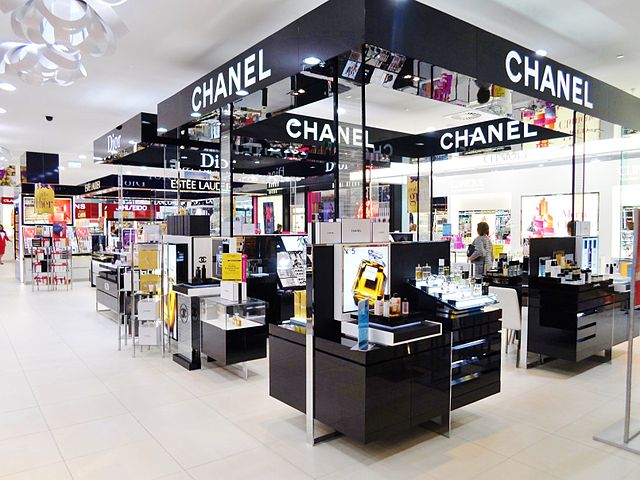
This is almost tailor-made for department stores. Macy’s fragrance hall remains one of the strongest arguments for the format because the category rewards browsing. Sampling three perfumes online is cumbersome. Sampling twelve in person, comparing dry-downs, and leaving with one that suits your mood, wardrobe, or season is still deeply department-store coded. 💎
3. Makeup has softened—but not dulled
Allure’s 2026 makeup coverage describes painterly color, blurred lips, watercolor blush, micro liner, and golden-hour skin. The point is not maximal product overload; it is expressive technique with a lighter hand. (Allure)
Again, Macy’s can benefit here. This is the kind of trend ecosystem that works best when a shopper can stand under good light, compare finishes, and be shade-matched by a human being. The store does not need to beat every specialty retailer on coolness; it needs to be good at translation. For a large segment of beauty customers, that matters more.
Where Macy’s is genuinely strong
Prestige beauty still makes sense there
Macy’s remains one of the more practical places to shop prestige beauty without committing to a full luxury boutique experience. It is less intimidating than a pure-play luxury environment and more elevated than a mass merchant aisle. For many shoppers, that middle ground is the sweet spot.
The company’s portfolio strategy reinforces this. Macy’s, Inc. continues to position itself across Macy’s, Bloomingdale’s, and Bluemercury, with Bluemercury explicitly described as a luxury beauty destination and a key growth area. Its 2024 strategy called for at least 30 new Bluemercury stores and around 30 Bluemercury remodels over three years. (macysinc.com)
That matters because it shows the parent company is not treating beauty as an afterthought. It is investing in beauty adjacency at the very moment the category is becoming more profitable, more experiential, and more identity-driven.
Convenience is still a luxury
One of the most underrated strengths of Macy’s is that it simplifies real life. The pure department-store proposition—many categories, one transaction, one return desk—still has value in an era of algorithmic shopping fatigue.
In 2026, that convenience feels newly premium. When every purchase is otherwise fragmented across apps, marketplaces, and specialty sites, a well-run Macy’s can feel unexpectedly elegant. You can test fragrance, replace a moisturizer, buy a wedding guest dress, and grab a table gift in one afternoon. That is not glamorous copywriting. It is a genuine consumer advantage.
The better stores are getting better
Not every Macy’s feels equal, and that is central to any fair review. The strongest argument against Macy’s is inconsistency. Some locations feel refreshed and intentional; others still carry the old department-store burden of over-assortment, dim energy, and tired merchandising.
But Macy’s itself has effectively acknowledged that gap. Its strategy is built around concentrating investment in higher-potential stores, and as of late 2025 the company said its Reimagine 125 locations were outperforming the broader Macy’s nameplate in comparable sales. (macysinc.com)
In plain English: the stores Macy’s is actively improving are showing evidence that the model can still work.
Where Macy’s feels behind
Curation can still slip into clutter
For the beauty shopper who wants a razor-sharp edit of the most interesting new brands, Macy’s is not always the first stop. Specialty beauty retailers often move faster in spotlighting buzzy founders, indie labels, or newer category language. Macy’s can still feel like it is strongest with established prestige, classic gifting, and big-brand familiarity rather than subcultural discovery.
That is not fatal. In fact, many shoppers prefer it. But it does shape the verdict. Macy’s is often at its best when the customer already knows the terrain and wants a reliable, tactile place to shop it.
Service varies more than it should
In 2026, good beauty retail is increasingly service-led. Customers want advice that feels informed, not scripted. They want counters that are staffed, not merely stocked.
When Macy’s gets this right, it has the edge of accessibility plus expertise. When it gets it wrong, the store can feel transitional—as if the products arrived before the energy did. That variance is the difference between a department store that feels enduring and one that feels dated.
The fragrance case for Macy’s is stronger than the fashion case
If I had to choose one category that best answers the title question, it would be fragrance.
Fragrance in 2026 is emotional, layered, and highly personal. Allure notes the rise of scent-stacking and comforting gourmand profiles, while Marie Claire highlights the decline of one-size-fits-all signature scent habits. (Allure)
Macy’s is built for exactly that sort of open-ended beauty discovery. Department stores remain one of the few environments where fragrance can be sampled as ritual rather than as a rushed test strip at checkout. A store like Macy’s still earns its place when it lets shoppers wander, compare, and be seduced a little.
That is not trivial. In a year when beauty is leaning into sensory reassurance, department stores have an atmospheric advantage the internet cannot fully replicate. 🌿

Macy’s and skincare: better positioned than the stereotype suggests
It is tempting to think of Macy’s beauty floor as mostly lipstick, fragrance, and legacy counters. But 2026 skincare trends make the store more relevant than that stereotype suggests.
This year’s beauty reporting consistently points toward products that bridge efficacy and approachability: gentler retinoids, smarter delivery systems, peptide-rich formulas, skin-barrier support, LED-adjacent interest, and more nuanced sun care. (Allure)
Those are exactly the kinds of categories that benefit from in-person selling. A shopper deciding between a vitamin C serum, a peptide cream, and a device-friendly routine often wants context. Department stores can provide that context without the clinical coldness of a med-spa or the hyper-speed atmosphere of social commerce.
There is also a subtle emotional advantage here. Macy’s still attracts a multigenerational customer. And in 2026, beauty is becoming more inclusive across age, life stage, and skin goals. Bluemercury’s recent “Up Next” campaign, which champions women 40+ and reframes aging around confidence and growth, sits squarely inside that shift. (macysinc.com)
That tone feels current. Beauty is moving away from correction-only language and toward empowered maintenance, radiance, and healthy longevity. Macy’s is better positioned for that conversation than trendier retailers that over-index on youth-coded novelty.
What kind of shopper will still love Macy’s?
The answer is clearer when you stop imagining a single “Macy’s shopper.”
Macy’s is still very good for the person who wants a polished middle ground: not ultra-exclusive, not bargain-basement, not digitally chaotic. It is good for fragrance gifters, occasion shoppers, practical prestige-beauty buyers, and people who want choice without needing to turn shopping into research homework.
It is also good for shoppers who value reassurance. A department store like Macy’s still offers a kind of visible legitimacy. That matters for prestige beauty purchases, especially in an era when online gray-market confusion and marketplace counterfeits have made some shoppers more cautious.
Where Macy’s is less ideal is for the person chasing only the newest niche name, the most experimental merchandising, or the subtlest form of luxury curation. If your beauty identity is deeply boutique, ultra-indie, or fashion-week obscure, Macy’s may feel broad where you want sharpness.
But that is not the same as being bad. It simply means Macy’s is best understood as a modern generalist with islands of excellence.

The real question: can a department store still feel modern?
This is where Macy’s becomes more interesting than its clichés.
A modern department store does not survive by pretending specialty retail never happened. It survives by editing itself around categories that still need touch, trial, trust, and atmosphere. Beauty is one of those categories. So is gifting. So are occasion-driven purchases.
Macy’s seems to understand this. Its recent strategy language is not about endless footprint growth; it is about targeted investment, stronger customer experience, and concentrated relevance. The company’s January 2026 reflection on progress emphasized careful portfolio decisions, investment in stores and experiences, and streamlining where needed. (macysinc.com)
That is the correct instinct. In 2026, fewer but better is a more credible retail philosophy than bigger but blurrier.
Final verdict: is Macy’s still a good department store?
Yes—especially if you judge it by what a department store needs to be now, not what it was asked to be fifteen years ago.
Macy’s is still good when it leans into beauty, fragrance, service, convenience, and edited cross-category shopping. It feels most relevant in locations that have benefited from investment, and most persuasive for shoppers who want accessible prestige rather than either mass-market basics or ultra-niche luxury. Company strategy, Bluemercury growth plans, and stronger performance in improved store cohorts all suggest Macy’s is not standing still, even if the transition is uneven. (macysinc.com)
The more refined answer is this: Macy’s is no longer good simply because it is Macy’s. It is good when the store feels considered, the beauty floor feels alive, and the experience reflects what 2026 beauty culture actually values—expertise, wellness-minded innovation, fragrance discovery, and a sense that shopping can still be sensorial, not just transactional. 🧬🌍
For many shoppers, that is more than enough reason to keep walking through those doors.
What Macy’s needs to do next
If Macy’s wants the “good department store” verdict to harden into a confident yes, the next phase is clear.
First, beauty floors must feel unmistakably staffed and sellable. Not merely stocked. 2026 beauty is too expertise-driven for passive merchandising alone. Second, curation should continue to improve. The future belongs to stores that reduce decision fatigue without reducing delight. Third, Macy’s should keep treating fragrance and skincare as signature categories, because both map beautifully onto the year’s strongest beauty currents: comfort, science, personalization, and sensory pleasure. 🔬💡
Done well, Macy’s does not need to mimic every specialty retailer. It only needs to own what department stores still do brilliantly: scale with tactility, prestige with approachability, and discovery with convenience.
That is not an outdated formula. It is a surprisingly contemporary one.
